How we picked
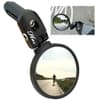
Lens durability led, because the most common way a bike mirror dies is the bike falling over in a garage. A stainless steel or break-proof polymer lens survives that; glass does not. Mount stability came next: bar-end mounts are inherently more stable than clamp mounts because the mirror sits inside the tube rather than hanging off a bracket, which is a large part of why our top pick is a bar-end design. Then field of view— a bigger face genuinely shows more, at the cost of being more exposed. We have not ridden every one of these for a season; this is exactly what we do instead.
Bar-end or handlebar clamp?
Bar-end mirrors plug into the open end of the handlebar. They are stable, out of the way of your hands and controls, and they put the mirror at the widest point of the bike, which gives a better angle past your own shoulder. The catch: your bars need open ends, and grips or bar plugs have to come off. Handlebar clampmirrors bolt anywhere along the bar and fit any setup, including bikes with sealed grips — they are more versatile but more prone to creeping loose and more exposed in a fall. Check your grip and bar setup before deciding.
Flat or convex — and which side?
Convex lenses squeeze a wider scene into a small mirror, which is why cheap mirrors use them. The trade is honest and worth knowing: convex makes following traffic look farther away and smaller than it is, so never judge a gap purely on a convex mirror. Flat lenses show true distance but less of the lane. Mount on your left in the US, where overtaking traffic comes from, and set the angle sitting on the bike in your normal riding position, not standing beside it. Pair the mirror with real lights— being seen and seeing behind you are two halves of the same problem.