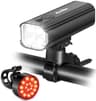
Visibility first, and why it is two separate problems
Most people think about bike visibility as one thing. It is really two, and they need different products, which is why the first two picks belong together rather than as alternatives.
Lights make a rider visible from directly in front and directly behind — the view a driver has when following or approaching them. That is the obvious case and it is well covered by an inexpensive USB-rechargeable set.
Reflective material is what makes a rider visible from the side. That matters because the side view is what a driver pulling out of a junction or a side road has, which is a very common way commuter collisions happen. A lit reflective vest covers the case that lights structurally cannot, and it goes over whatever they are already wearing, so it is forgiving to buy.
If you buy one gift from this page, buy the lights. If you buy two, buy the lights and the vest, because together they close the whole problem rather than two-thirds of it.
Security: matched to where they actually park
The commuter lock question is different from the general one, because a commuter leaves their bike in the same predictable place for the same predictable eight hours, every weekday. That is the ideal situation for a thief, and it is why a lock that came free with a cheaper bike is not adequate.
An integrated chain is a good commuter answer specifically because it is flexible enough to reach around the awkward racks, railings and posts that real bike parking consists of, where a rigid U-lock sometimes will not fit. The honest framing is the same as always: a lock buys time against someone with tools, not immunity. What to check: nothing on the bike, but if they park indoors at a secure office, spend the money on one of the other picks instead.
Carrying: the thing that decides whether they ride at all
Riding to work with a laptop on your back is the most common reason people stop riding to work. A rack-top bag moves the weight off the rider and onto the bike, which removes the sweaty-back problem and most of the discomfort at once.
What to check — and this is the one fitting question on the page: the bike needs a rear rack already fitted over the back wheel. If it does not have one, the bag is a gift they cannot use until they buy something else, which is exactly the outcome to avoid. A glance at the back of the bike settles it. Commuter bikes and e-bikes very often have a rack as standard; road bikes usually do not.
The frame bag is the no-fitting-required alternative: it straps to the top tube of any bike and holds a phone, keys, a bank card and a snack, which covers the everyday version of the problem without needing a rack.
The mirror: the cheapest upgrade nobody asks for
A handlebar or bar-end mirror is a genuinely underrated commuter gift. Shoulder checks in traffic are the moment a rider is least stable and least able to see what is in front of them, and a mirror removes the need for most of them. It is especially valuable for anyone who finds turning to look uncomfortable, and for riders on heavier bikes where a wobble matters more. It is also under $20, which makes it an easy addition rather than a choice. What to check: nothing meaningful — it clamps to a standard handlebar or plugs into the end of one.
What not to buy a commuter
Clothing, unless you know the size. Cycling-specific clothing is closely fitted by design, so guessing produces a return. The reflective vest is the exception, because it is worn over everything and sized generously.
A second helmet. If they are commuting daily, they already have one, and helmet fit is personal enough that a spare is rarely welcome unless theirs is visibly old.
Anything requiring installation they did not ask for. Fenders, racks and conversion parts are all excellent objects and all bike-specific. Unless you have been told exactly what to get, they become a project rather than a present.