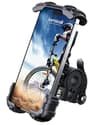
How we picked
Retention typecame first, because it is the difference between a mount that works for years and one that works until the first bad road. A twist-lock or quarter-turn interface holds the phone by a physical catch, so vibration cannot walk it loose — that is why it wins the top spot despite needing a case. A lockable clamp is the next best thing and needs no case, which is why it is the value pick. A stretch net is the least secure but the most universal, and it is genuinely fine at cruiser speeds.
Then fit: a mount that only works with one phone generation is a mount you replace when you upgrade. Then where the phone ends up— an out-front position is more readable and keeps your bar clamps free, while a stem-top clamp is more compact. Finally, weather, which is the one factor everyone forgets until the first rainy commute. We do not score these numerically, because we have not ridden every mount for a season; here is exactly what we do instead.
Mount the phone, or bag the phone?
Worth deciding before you buy. Mount it on the bars if you genuinely navigate while riding — a phone in a bag is a phone you stop to check. Bag it if your phone is mostly a phone: a waterproof top-tube bag protects it from rain and road grit, carries your keys and cards with it, and eliminates the vibration question entirely. Riders on long, wet commutes are often happier with the bag, and it costs less than a premium mount.
Two things people get wrong
First, handlebar diameter. Many value e-bikes use thicker bars than a road bike, and some clamps are sized for 22.2 mm only. Measure before you order. Second, vibration and camera lenses — sustained high-frequency vibration from a rigid frame can damage optical image stabilization on some phones. If that worries you, the top-tube bag or a mount with a vibration-damping interface is the safer route, and a lower-pressure tire or a suspension seatpost will take some buzz out of the whole bike.
One practical note on space. The handlebar is the most contested real estate on an e-bike — a display, a bell, a light and now a phone — and it is also where a lot of riders end up putting a drink, because the battery occupies the downtube where the bottle cage should go. If that is your situation, mount the phone first and read our water bottles and cages page before you commit the rest of the bar.