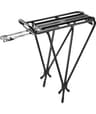
How we picked
Mounting compatibilityis the gate: if it does not fit, nothing else matters. Disc-brake clearance and frame eyelets are where most rack purchases go wrong on budget e-bikes, so both rack picks address that directly — one with an explicitly disc-compatible frame mount, one from a brand whose fitment and spares are easy to find. Capacity came second, and we deliberately favored a sensible 15 liters over maximum volume, because a heavily-loaded bike handles worse and 15 L covers a real commute. Third, weather— an included rain cover is a meaningful differentiator, since most cheap bags sell it separately or not at all.
Rear rack or front basket?
Rear is the default and the better engineering answer. Weight behind you barely affects steering, a rack takes panniers on both sides as well as a trunk bag, and the load sits low. Choose it for commuting, groceries and anything heavy. Front basketswin on convenience: you drop a bag in without unclipping anything and you can see your cargo. The cost is steering feel — weight over the front wheel makes the bars heavy and twitchy at low speed, which is more noticeable on a heavy e-bike than on a light bicycle. Keep front loads light and put the heavy things at the back.
Weight limits and the ride
Check two numbers before loading up: the rack’s rated capacity, and your bike’s total payloadlimit (rider plus cargo), which budget e-bike makers do publish. It is easy to be within the rack’s limit and over the bike’s — our guide to e-bike payload capacity lists the published limits model by model. When the load is bigger than a rack should carry, it belongs behind the bike rather than on it — our bike trailer roundup ranks five on published capacity, from 80 lb to 275 lb. A loaded bike also stops differently: leave more braking distance, expect the extra mass to eat range per our range guide, and check your tire pressure more often, because an underinflated tire under load is how pinch flats happen.