Volt & Velo

Best Bike Repair Stands Under $100

A 70 lb e-bike is the reason you need a stand and the reason a cheap one fails. Three stands under $100 ranked on published weight capacity — and the one spec none of them states.

By Stephen V.Last updated How we pick

Buy the CXWXC 88 lb e-bike stand. It is the only stand in this band sold and named as an e-bike stand rather than a bicycle stand that might cope, and its published 88 lb capacity clears the heaviest bike we list — 75 lb — with real margin, on a folding tripod you can move out of the way. Spending as little as possible? The budget pick is the CHEPARK bench/wall mount, the cheapest stand here by a wide margin and structurally the most stable idea on the page, because a stand bolted to a bench cannot tip — right if you have a workbench or a stud wall, useless if you do not. Every pick was selling under $100 when prices last refreshed, as of November 22, 2026.

Three of the four stands we track sell under $100, so the band is where this category lives. The one above it is the most interesting fact on the page: the Park Tool PCS-10.3, at roughly three times the price, publishes a lowermaximum weight (80 lb) than the two budget stands claim — because it publishes a real specification table and they publish a number in a product title.

How this is funded:we earn a commission if you buy through our links, at no extra cost to you. It never changes which product we recommend, and we’ll tell you plainly when to skip one. Full disclosure.

Quick picks

Ranked on published specs, price and buyer fit. Select a row to jump to the full write-up. We have not ridden every one of these — here is exactly what we do instead.

#ProductBest forPrice
1
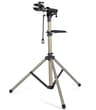
CXWXC 88 lb E-Bike Repair Stand

CXWXC 88 lb E-Bike Repair Stand

The default tripod stand for a value e-bike, and one of very few in the category that puts an e-bike weight in the product name instead of leaving you to guess. An 88 lb published capacity clears every bike in our registry with real margin, including the 75 lb Heybike Mars 2.0, at around a third of what the shop-grade stands cost.

Best under $100
$80.24 · View on Amazon

$99.9820% off

Price as of November 22, 2026. #ad How we’re funded

2
VEVOR 110 lb Bike Repair Stand

VEVOR 110 lb Bike Repair Stand

The highest published capacity here, with a stated 110 lb limit, a 40.3 to 59.4 in height range and a tool tray, at a price below the 88 lb tripod. If you believe the number, it is the most stand for the money on this page - and the honest caveat is that it is a self-published figure in a listing rather than a tested one, on a stand with a two-leg base.

Highest published capacity
$95.90 · View on Amazon

Price as of November 22, 2026. #ad How we’re funded

3
CHEPARK 88 lb Bench/Wall Mount Work Stand

CHEPARK 88 lb Bench/Wall Mount Work Stand

The cheapest honest way to hold a heavy e-bike, and structurally the most stable idea on this page: it bolts to a bench or a wall, so the tipping problem that comes with a tripod and a 70 lb bike simply does not exist. Same 88 lb published capacity as the tripod above for about a third of the money, as long as you have somewhere to bolt it.

Budget pick: cheapest here
$42.99 · View on Amazon

Price as of November 22, 2026. #ad How we’re funded

The picks in full

#1Best under $100

CXWXC 88 lb E-Bike Repair Stand

The default tripod stand for a value e-bike, and one of very few in the category that puts an e-bike weight in the product name instead of leaving you to guess. An 88 lb published capacity clears every bike in our registry with real margin, including the 75 lb Heybike Mars 2.0, at around a third of what the shop-grade stands cost.

What you get

  • 88 lb published capacity - above the heaviest published bike weight we list (75 lb) with margin
  • Sold and named as an e-bike stand rather than a bicycle stand that might cope
  • Tripod base folds, so it does not live permanently in the middle of the garage
  • Costs roughly a third of the shop-grade alternative

Trade-offs

  • The clamp jaw diameter range is not published, which matters because e-bike tubes are fat
  • A heavy bike at chest height on a folding tripod is a tipping risk if you lean on it - load it low and keep the legs spread
  • No maker spec page we could read: the capacity figure comes from the listing, not from an engineering sheet
Key specTripod clamp work stand; 88 lb published maximum bike weight; folding base; clamp jaw range not published
Best forA 60-75 lb e-bike, on a tripod you can move

Specs read from the manufacturer or retailer listing, on October 10, 2026. “Not published” means the maker does not state that figure.

#2Highest published capacity

VEVOR 110 lb Bike Repair Stand

The highest published capacity here, with a stated 110 lb limit, a 40.3 to 59.4 in height range and a tool tray, at a price below the 88 lb tripod. If you believe the number, it is the most stand for the money on this page - and the honest caveat is that it is a self-published figure in a listing rather than a tested one, on a stand with a two-leg base.

What you get

  • 110 lb published maximum - the only figure here that would clear a bike heavier than anything we recommend
  • Published height range of 40.3-59.4 in, so you can set it to standing work height
  • Includes a tool tray, which stops small parts going into the garage floor
  • Folds for storage and costs less than the 88 lb tripod

Trade-offs

  • A two-leg base with a front stabilizer is less inherently stable than a true tripod at the same load
  • The capacity is published in the listing only; we could not read a maker spec sheet for it
  • Clamp jaw diameter range not published - check your frame tube before you commit
  • A higher claimed number is not the same as a tested one, and the premium stand here publishes a LOWER limit
Key specTwo-leg clamp work stand with tool tray; 110 lb published maximum bike weight; 40.3-59.4 in height range; clamp jaw range not published
Best forThe biggest published number per dollar

Specs read from the manufacturer or retailer listing, on October 10, 2026. “Not published” means the maker does not state that figure.

#3Budget pick: cheapest here

CHEPARK 88 lb Bench/Wall Mount Work Stand

The cheapest honest way to hold a heavy e-bike, and structurally the most stable idea on this page: it bolts to a bench or a wall, so the tipping problem that comes with a tripod and a 70 lb bike simply does not exist. Same 88 lb published capacity as the tripod above for about a third of the money, as long as you have somewhere to bolt it.

What you get

  • 88 lb published maximum bike weight at the lowest price on this page
  • Bench or wall mounted, so the load goes into the bench and the stand cannot tip
  • Takes up no floor space at all when nothing is clamped in it

Trade-offs

  • Needs a solid bench or stud wall - this is not an option for a renter with plaster and no workbench
  • Fixed location: the bike has to come to the stand, which is awkward with a 70 lb bike and a flight of stairs
  • No height adjustment of the kind a tripod gives you, and the clamp jaw range is not published
Key specBench or wall-mounted clamp work stand; 88 lb published maximum bike weight; no floor footprint; clamp jaw range not published
Best forThe tightest budget, and the most stable hold

Specs read from the manufacturer or retailer listing, on October 10, 2026. “Not published” means the maker does not state that figure.

Why an e-bike needs a different stand

A bicycle weighs 25 lb and a value e-bike weighs 50 to 75. That changes three things at once. The clamp has to hold three times the load without slipping. The base has to resist a much larger tipping moment, because the mass is up at chest height and you are pulling on it with a wrench. And the tube the clamp closes on is fatter — e-bike down tubes and seat tubes are oversized to house a battery and take motor torque, which is exactly where cheap clamps run out of jaw.

The corollary is that a stand rated for a bicycle is not a stand you can use. A 60 lb capacity figure looks generous next to a road bike and is a hazard under a fat-tire folder. Every pick on this page publishes a capacity above the heaviest bike in our registry; that is the filter we applied before anything else, and it is the one you should apply too. Our e-bike weight guide lists what each category actually weighs.

What each one publishes

StandMax bike weightBaseHeight rangeClamp range
CXWXC 88 lb E-Bike Stand88 lb (listing)Folding tripodNot publishedNot published
VEVOR 110 lb Stand110 lb (listing)Two legs + front stabilizer40.3-59.4 inNot published
CHEPARK 88 lb Bench/Wall88 lb (listing)Bolts to a bench or stud wallFixed to the mountNot published
Park Tool PCS-10.3 (above the band)80 lb / 36 kg (maker spec table)Tripod, 36 x 36 in footprint39-57 in22-76 mm

Read the last column, because it is the gap in this whole band. Not one stand under $100 publishes the diameter range its clamp will close on. That is the figure that decides whether the jaw actually grips a fat e-bike tube, and the only stand here that states it — 22 to 76 mm — is the one above the band. Clamping technique is the workaround: clamp the seatpost rather than the frame wherever the post is long enough and round, which is both a known diameter and the part designed to be clamped.

Capacity claims are self-published. Treat them as a floor, not a promise.

The 110 lb and 88 lb figures on this page come from Amazon listings, not from tested specification sheets, and two of the three stands state them in the product title. We report them because they are what the seller publishes, and we rank them against the heaviest bike we know of rather than against each other — an 88 lb claim and a 110 lb claim from two unrelated listings are not comparable with any precision. Buy margin rather than a headline: if your bike is 70 lb, an 88 lb claim is sensible and a 60 lb claim is not.

Two habits matter more than the number. Take the battery out before you lift the bike into the stand — it is often 6 to 9 lb of the total and the easiest weight to remove, which is one more argument for a bike with a removable pack. And spread the legs fully, set the bike low rather than high, and do not lean on a tripod with a 70 lb bike clamped at chest height.

What to do with it once it is up there

A stand is the tool that makes every other job possible, which is why it usually gets bought second. With the bike at working height, the jobs that actually need one are chain cleaning and lubing, brake-pad changes, gear adjustment and anything involving the rear wheel on a hub-motor bike. Our maintenance checklist sets out the schedule, and chain lubing is the job that repays a stand fastest on a motor-driven drivetrain.

Buy the consumables with it rather than after it: chain lube rated for e-bike torque, a cleaning kit with a chain scrubber, and a torque wrenchin the 3 to 20 Nm range, which is the single most useful tool to own after the stand itself. If the bike lives in a flat rather than a garage, a wall racksolves storage and the bench-mount stand solves the work — the two together take less space than a tripod.
Frequently asked questions

What weight capacity do I need for an e-bike repair stand?

More than your bike weighs, with margin. Value e-bikes run 50 to 75 lb, so an 80 lb-plus published capacity is the sensible floor and anything claiming 60 lb is not a candidate. Remember you can take 6 to 9 lb out before lifting by removing the battery, and that the published figures in this band are self-reported listing claims rather than tested specifications.

Will a cheap repair stand clamp a fat e-bike tube?

Probably, but no stand under $100 publishes the diameter range to prove it — which is the real gap in this band. The reliable workaround is to clamp the seatpost rather than the frame: a post is round, a known diameter and designed to be clamped. Where the post is too short to clear the saddle, clamp the top tube at its narrowest point and keep the bike low.

Tripod stand or bench-mounted stand?

Bench-mounted if you have a bench or a stud wall, because the load goes into the structure and the stand cannot tip — which is the main hazard with a heavy bike at chest height. Tripod if you rent, have no bench, or need the stand out of the way between jobs. The bench mount is also the cheapest option here by a wide margin.

Is a repair stand worth it for an e-bike?

More than for a bicycle. You cannot flip an e-bike upside down — it is heavy, the display and controls are on top, and the battery and electronics are not meant to invert. That leaves a stand as the only practical way to do chain, brake and gear work, and those jobs come round faster on a motor-driven drivetrain than on a bicycle's.

Sources

  • Park Tool PCS-10.3 Deluxe Home Mechanic Repair Stand (maker product page) — Maker specification: maximum weight capacity 36 kg (80 lb); clamp accepts round and aero tubes from 22 to 76 mm (7/8 in to 3 in); height adjustment 99 cm to 145 cm (39 in to 57 in); open footprint 92 x 92 x 121 cm (36 x 36 x 48 in); stand weight 7.2 kg (16 lb). Park Tool describes the stand as "compatible with virtually all two-wheeled pedal-driven bicycles, including fat bikes and most e-bikes" and publishes no separate e-bike figure (accessed October 10, 2026)
  • U.S. CPSC - Requirements for Bicycles (16 CFR part 1512), business guidance — Read in full on the access date. Braking: "A bicycle that only has hand brakes must stop within 15 feet when tested with a 150-pound rider riding at 15 miles per hour"; bicycles with foot brakes "must stop within 15 feet when tested with a rider of at least 150 pounds at a speed of 10-mph"; and "when the hand lever is pushed down with 10 pounds or less applied 1 inch from the end of the lever, the brake pads must contact the braking surface on the wheel." Foot brakes must produce at least 40 lbf of braking force for 70 lb of pedal force, and the distance from the middle of a hand lever to the handlebar may be no more than 3 1/2 inches (3 inches on sidewalk bicycles). The test conditions - a 150 lb rider and 15 mph - are the reference point this site uses when explaining why a 50-75 lb e-bike ridden at 20 mph is outside the envelope the standard was written around. The standard sets a system-level stopping distance; it does not specify a pad compound, a pad thickness or a wear limit (accessed October 24, 2026)

Keep reading