Volt & Velo

Best Rain Gear for E-Bikes

On an e-bike most of the water comes off the road, not out of the sky. Fenders, a packable shell, waterproof socks and a cover, ranked in the order they actually keep you dry.

By Stephen V.Last updated How we pick

Buy fenders before you buy a jacket. On a fat-tire value e-bike, the ZSYALY mudguard set is the one to get — it covers the 20, 24 and 26 x 4.0-inch tires this bracket actually runs, front and rear in one box, and it stops the stripe of road water that a jacket cannot help with. On skinnier road or hybrid tires, the ROCKBROS adjustable set is the equivalent. The budget pick is the Kinetrail cover at the lowest price on this page: it does nothing while you ride and everything while the bike is parked outside, and it has a lock hole so the bike stays locked underneath. Every price is live, as of November 22, 2026.

The reason this page leads with fenders is physics, not preference. A 20 mph bike with a 4-inch tire picks up a sheet of water and throws it forward onto your feet and backward up your spine, and it keeps doing it for twenty minutes after the rain has stopped and the sky has cleared. A $100 shell does not address that. Fenders do, for under $20. Then dress for the weather, in this order: fenders, then a shell, then your feet, then the bike’s own shelter.

How this is funded:we earn a commission if you buy through our links, at no extra cost to you. It never changes which product we recommend, and we’ll tell you plainly when to skip one. Full disclosure.

Quick picks

Ranked on published specs, price and buyer fit. Select a row to jump to the full write-up. We have not ridden every one of these — here is exactly what we do instead.

#ProductBest forPrice
1
ZSYALY Fat Bike Front and Rear Mudguard Set

ZSYALY Fat Bike Front and Rear Mudguard Set

The cheapest honest answer for a fat-tire e-bike, and the one most people should buy first. It covers 20-, 24- and 26-inch wheels at 4.0 inches wide, which is the exact tire the value bracket runs and the exact tire that throws a rooster tail up your back.

Best overall: fat-tire fenders
$18.99 · View on Amazon

Price as of November 22, 2026. #ad How we’re funded

2
ROCKBROS Adjustable Bike Fender Set

ROCKBROS Adjustable Bike Fender Set

The pragmatic pick for a skinnier-tired commuter: adjustable clip-on fenders that span 700c through 27.5-inch wheels, so they follow you to the next bike instead of becoming landfill when you change frames.

Best for road and hybrid tires
$38.98 · View on Amazon

Price as of November 22, 2026. #ad How we’re funded

3
Baleaf Men's Packable Cycling Rain Jacket

Baleaf Men's Packable Cycling Rain Jacket

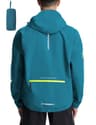
Baleaf is the brand that keeps turning up when you filter cycling kit by value, and the rain jacket is the same story: waterproof, cut for a riding position rather than a walking one, and light enough that it lives in the pannier permanently.

Best rain jacket
$44.79 · View on Amazon

$55.9920% off

Price as of November 22, 2026. #ad How we’re funded

4
RANDY SUN Waterproof Cycling Socks

RANDY SUN Waterproof Cycling Socks

The niche pick that solves a real problem: waterproof socks mean cold, wet commutes stop being miserable without buying overshoes. They breathe less than a normal sock — that is the physics — but dry feet in January is worth it.

Best for wet feet
$28.99 · View on Amazon

Price as of November 22, 2026. #ad How we’re funded

5
Kinetrail Waterproof E-Bike Cover (1 Bike)

Kinetrail Waterproof E-Bike Cover (1 Bike)

The detail that makes this the pick is the lock hole: you can run a chain or U-lock through the cover to the frame, so the bike stays locked while it stays covered. Rain, sun, UV and dust protection for less than the price of a set of brake pads.

Budget pick: cheapest here
$9.99 · View on Amazon

$13.9929% off

Price as of November 22, 2026. #ad How we’re funded

The picks in full

#1Best overall: fat-tire fenders

ZSYALY Fat Bike Front and Rear Mudguard Set

The cheapest honest answer for a fat-tire e-bike, and the one most people should buy first. It covers 20-, 24- and 26-inch wheels at 4.0 inches wide, which is the exact tire the value bracket runs and the exact tire that throws a rooster tail up your back.

What you get

  • Sized for 20/24/26 x 4.0 in tires — the standard value fat-tire fitment
  • Front and rear in one set, so you are not buying twice
  • Costs a fraction of the branded full-coverage sets

Trade-offs

  • Shorter coverage than a full wrap-around fender, so your feet still catch spray
  • Budget mounting hardware benefits from a thread-locker and a re-check
Key specFront + rear fat-tire mudguard set; fits 20/24/26 x 4.0 in tires
Best forFat-tire value e-bikes on a small budget

Specs read from the manufacturer or retailer listing, on August 18, 2026. “Not published” means the maker does not state that figure.

#2Best for road and hybrid tires

ROCKBROS Adjustable Bike Fender Set

The pragmatic pick for a skinnier-tired commuter: adjustable clip-on fenders that span 700c through 27.5-inch wheels, so they follow you to the next bike instead of becoming landfill when you change frames.

What you get

  • One set covers 700c and 26–27.5 in wheels
  • Adjustable length and angle to clear a rack or a disc caliper
  • Comes off in a minute for a wash or a car trip

Trade-offs

  • Not for fat tires
  • Clip-on fenders rattle if the mounts are left loose
Key specAdjustable clip-on fender set; fits 700c and 26–27.5 in wheels
Best forRoad and hybrid-tired e-bikes, and riders who swap bikes

Specs read from the manufacturer or retailer listing, on August 18, 2026. “Not published” means the maker does not state that figure.

#3Best rain jacket

Baleaf Men's Packable Cycling Rain Jacket

Baleaf is the brand that keeps turning up when you filter cycling kit by value, and the rain jacket is the same story: waterproof, cut for a riding position rather than a walking one, and light enough that it lives in the pannier permanently.

What you get

  • Cut for a forward riding position, so the back does not ride up
  • Packs small enough to leave in a bag all summer
  • Waterproof shell rather than a shower-resistant windbreaker

Trade-offs

  • Any fully waterproof shell traps sweat when you work hard
  • Color and size availability moves around by listing
Key specWaterproof packable cycling rain jacket (men's)
Best forThe default value rain jacket for commuting

Specs read from the manufacturer or retailer listing, on August 18, 2026. “Not published” means the maker does not state that figure.

#4Best for wet feet

RANDY SUN Waterproof Cycling Socks

The niche pick that solves a real problem: waterproof socks mean cold, wet commutes stop being miserable without buying overshoes. They breathe less than a normal sock — that is the physics — but dry feet in January is worth it.

What you get

  • Waterproof membrane keeps feet dry in rain
  • Cushioned and mid-calf height
  • Cheaper than a set of winter overshoes

Trade-offs

  • Less breathable than a standard sock — warm in summer
  • Sold as a single pair
Key specWaterproof mid-calf sock; breathable membrane; cushioned
Best forWet and cold commuting

Specs read from the manufacturer or retailer listing, on August 11, 2026. “Not published” means the maker does not state that figure.

#5Budget pick: cheapest here

Kinetrail Waterproof E-Bike Cover (1 Bike)

The detail that makes this the pick is the lock hole: you can run a chain or U-lock through the cover to the frame, so the bike stays locked while it stays covered. Rain, sun, UV and dust protection for less than the price of a set of brake pads.

What you get

  • Lock hole lets you keep the bike locked under the cover
  • Rain, UV and dust protection in one
  • Sized for a single e-bike rather than a road bike

Trade-offs

  • A cover advertises that something worth covering is underneath
  • Thin fabrics tear at the seams in sustained wind
Key specWaterproof single-bike cover with a lock hole; UV and dust resistant
Best forA single e-bike locked up outdoors

Specs read from the manufacturer or retailer listing, on August 18, 2026. “Not published” means the maker does not state that figure.

Check your tire width before anything else

This is the one decision on the page that cannot be fudged, and it is the reason there are two fender picks rather than one. A fat-tire set sized for 4.0-inch tires will not clamp usefully to a 1.75-inch commuter tire, and a clip-on road set physically will not span a fat tire — ROCKBROS state 700c through 27.5 in and say plainly that it is not for fat tires. Look at the number molded into your sidewall: if it reads 20 x 4.0, 24 x 4.0 or 26 x 4.0, buy the fat set. If it reads 700 x something, or 26 to 27.5 in at a width under 3 in, buy the adjustable set. Our full fender roundup covers the wrap-around options above this price and the 29-inch fitments.

What each one publishes

ItemJobFitment / cutWaterproof rating
ZSYALY fat mudguard setStops road spray20 / 24 / 26 x 4.0 in fat tiresNo IP or waterproof rating published
ROCKBROS adjustable fender setStops road spray700c and 26-27.5 in wheels; not fat tiresNo IP or waterproof rating published
Baleaf packable rain jacketKeeps the sky off youCut for a forward riding positionDescribed as waterproof; no hydrostatic-head figure published
RANDY SUN waterproof socksKeeps feet dryMid-calf, sold as a single pairMembrane stated; no rating figure published
Kinetrail e-bike coverKeeps the parked bike dryOne e-bike; has a lock holeDescribed as waterproof; no rating figure published

The right-hand column is the finding. Not one product in this category publishes a measurable waterproof figure — no IP rating on the fenders or the cover, no hydrostatic head on the jacket, no rating on the sock membrane. “Waterproof” is doing all the work, and it is a word rather than a number. What makes this almost funny is that the bikes publish better figures than the rain gear does: the Jasion Roamer states an IPX-6 battery, the SASIKEIBIKE folder states an IPX6 battery compartment and the Heybike Mars 3.0 states IP65 for the bike. So we rank on fitment, coverage and cut, which are checkable, and we do not compare waterproof claims against each other.

Is riding an e-bike in the rain actually safe?

For a modern value e-bike in normal rain, yes, with three caveats that are worth more than any product on this page. First, braking distances grow— wet rotors and wet pads need a squeeze to clear before they bite, so brake earlier and in a straight line. Second, keep water away from the connectors: do not jet-wash a bike, do not charge a wet pack, and dry the battery contacts before refitting the pack. The CPSC’s micromobility guidance is explicit that moisture is a hazard to lithium packs, which is why the rinse-and-charge habit is the one to break. Third, be seen— rain cuts how early a driver picks you out, and a 1000-lumen front-and-rear set costs less than $20. See the light picks and our full guide to riding in the rain, which covers the electrical side in detail.

The sweat problem, stated honestly

A genuinely waterproof shell traps the heat and moisture you generate, and an e-bike makes this better rather than worse — you are working less than a cyclist does for the same speed, so you produce less sweat under the jacket. That is the strongest argument for buying a proper waterproof rather than a shower-resistant windbreaker on an e-bike specifically. Two practical notes: open the pit zips or the front before a climb rather than after it, and buy the cut rather than the brand — a jacket cut for a riding position does not ride up and expose your back, which is where a walking shell fails. The rain jacket roundupcovers the women’s cut and the cheapest shell that works.

The last item is the one people forget until it is too late. If the bike sleeps outside, a cover is the cheapest maintenance on this page: it keeps standing water out of the display, the charge port and the brake pivots, which is where rust and corrosion start on a value build. Pick the one with the lock hole so covering the bike does not mean unlocking it, and accept the trade-off that a cover tells a passer-by something worth covering is underneath — which is an argument for also reading the sub-$100 lock picks.

Frequently asked questions

What is the first thing to buy for riding an e-bike in the rain?

Fenders. Most of the water that hits you on a wet road comes off your own tires, not out of the sky, and a fat tire at 20 mph throws a lot of it. A fender set costs under $20 for fat tires and keeps working for twenty minutes after the rain stops, which no jacket does. Buy fenders, then a shell.

Can you ride an e-bike in the rain?

Normal rain, yes — value e-bikes are built with sealed connectors and several publish an IPX6 or IP65 rating for the battery or the bike. What to avoid is standing water deep enough to reach the hub motor, jet-washing the bike, and charging a wet battery. Dry the contacts before you refit the pack, and brake earlier than you would in the dry.

Are waterproof socks worth it?

If you commute through winter, yes, and they are cheaper than overshoes. Feet are the first thing to get wet on an unfendered bike and the last thing to dry out. The honest trade-off is breathability: a membrane sock is warm in summer, so these are a cold-and-wet-season purchase rather than a year-round one.

Do I need a cover if the bike lives outside?

Yes, and it is the cheapest preventive maintenance available. Standing water in the display, the charge port and the brake pivots is where corrosion starts on a value build. Choose a cover with a lock hole so you can keep the bike locked underneath, and remember that a covered bike also advertises that there is something worth covering.

Sources

  • U.S. CPSC — Micromobility Information Center (e-bike battery safety) — CPSC guidance on lithium-ion battery safety and buying e-bikes/batteries certified to UL 2849 / UL 2271 / UL 2272 (accessed July 22, 2026)
  • New York Vehicle & Traffic Law § 1236 - Lamps and other equipment on bicycles — Read in full on the access date. Subdivision (b): "No person shall operate a bicycle unless it is equipped with a bell or other device capable of giving a signal audible for a distance of at least one hundred feet, except that a bicycle shall not be equipped with nor shall any person use upon a bicycle any siren or whistle." The requirement is therefore stated as AUDIBILITY AT 100 FEET, not as a decibel figure, and sirens and whistles are expressly prohibited - which is directly relevant to the alarm and siren modes built into several electronic bike horns. The same section also sets lighting (a white front lamp visible at 500 ft and a red or amber rear light visible at 300 ft after dark), a brake able to skid the braked wheel on dry level clean pavement, and reflector requirements. Equipment law is state by state; this is New York's wording and is cited as an example of how the requirement is framed, not as a national rule (accessed October 17, 2026)

Keep reading