Volt & Velo

Best E-Bike Child Seats

On an e-bike the limit is almost never the seat — it is the rack underneath it. Five child seats ranked on the carrier rating they publish, with live prices.

By Stephen V.Last updated How we pick

Buy the Thule Yepp Nexxt 2 Maxi if your rack qualifies, and the Burley Dash RM if you want the rack requirement spelled out before you spend anything.Those two are the only seats here whose maker publishes the carrier standard and load rating the seat needs underneath it — Thule asks for a luggage carrier conforming to EN ISO 11243:2016 marked with a 27 kg load capacity, Burley for a rack meeting ISO 11243 rated to at least 55 lb (25 kg), 120–175 mm wide, with 10–16 mm tubing. If you want a front seat instead, the iBert is the pick and the catch is cockpit space, not weight. The budget pick is the Schwinn Deluxe Child Carrier, which publishes the same 40 lb child ceiling as both premium seats for about a quarter of the money and brings its own bracket instead of relying on your rack. Live prices on every row, as of November 22, 2026.

This page ranks on the rack rather than on the seat, because that is where value e-bikes actually fail. A rear seat plus a five-year-old is roughly 45 lb bolted over your back wheel, and the integrated rack on a sub-$1,500 e-bike very often publishes no load rating at all — no ISO mark, no number, nothing in the manual. The seats below are ordered by how much of that question their maker is willing to answer in writing.

How this is funded:we earn a commission if you buy through our links, at no extra cost to you. It never changes which product we recommend, and we’ll tell you plainly when to skip one. Full disclosure.

Quick picks

Ranked on published specs, price and buyer fit. Select a row to jump to the full write-up. We have not ridden every one of these — here is exactly what we do instead.

#ProductBest forPrice
1
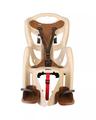
Thule Yepp Nexxt 2 Maxi (Rack Mount)

Thule Yepp Nexxt 2 Maxi (Rack Mount)

The pick because it tells you, in writing, what it needs underneath it: Thule states the seat "shall only be fitted to luggage carriers conforming to EN ISO 11243:2016 marked with a 27 kg load capacity". That one sentence is the most useful fact in this whole category, because it turns a vague worry about your e-bike's rack into a number you can go and check. The seat itself is the lightest here at a published 6.2 lb, carries a 5-point harness, and is rated to a 40 lb, 43.3 in child. It is also the most expensive thing on this page, and Thule says nothing at all about electric bikes — the rack rating is what you verify, not a badge.

Best overall: publishes the exact rack standard it needs
$214.95 · View on Amazon

$269.9520% off

Price as of November 22, 2026. #ad How we’re funded

2
Burley Dash RM (Rack Mount)

Burley Dash RM (Rack Mount)

The only maker in this group that writes down what it thinks about electric bikes. Burley's own compatibility guide says the seat "is compatible with E-Bikes, as long as the requirements listed above are met" — and then lists those requirements in numbers you can measure: a rack meeting ISO 11243 rated to at least 55 lb (25 kg), 4.72–6.89 in (120–175 mm) wide, with 0.39–0.63 in (10–16 mm) tubing. It also publishes a 40 lb child limit, a 2.2 lb cap on the rear pocket, and the instruction that matters most on a value e-bike: check the limits of the seat, the bike AND the rack, and ask your bike's maker.

Best documented: the only maker that addresses e-bikes directly
$143.96 · View on Amazon

$179.9520% off

Price as of November 22, 2026. #ad How we’re funded

3
Bellelli Pepe Clamp (Rack Mount)

Bellelli Pepe Clamp (Rack Mount)

The middle of the price range, and the reason it sits third rather than second is documentation, not hardware. The Amazon listing is the rack-mount Clamp version, states manufacture in Italy, and stops there — no child weight limit, no carrier width, no load rating. European retailer pages for the Pepe quote a 22 kg child limit and EN 14344 certification, and they do not agree with each other on seat weight or age range, so this page does not print a figure we could not read on a page Bellelli controls. Buy it if you want a European-certified seat at around half the Thule's price and you are willing to read the box before you fit it.

Best mid-price rack-mount seat
$110.95 · View on Amazon

Price as of November 22, 2026. #ad How we’re funded

4
iBert Front-Mounted Child Bike Seat

iBert Front-Mounted Child Bike Seat

The front-mount answer, and it belongs here because a kid seat in front is a genuinely different experience — the child sits ahead of you, in conversation, where you can see them. The catch is specific to electric bikes and it is not about weight: a front seat needs bare stem and steerer space, and an e-bike cockpit is usually already carrying a display, a controller harness and a throttle. Look at what is actually on your stem before you order. iBert's own specification page did not load on the access date, so the 38 lb limit retailer listings quote is recorded here as unconfirmed rather than as a published spec.

Best front-mount option
$72.99 · View on Amazon

Price as of November 22, 2026. #ad How we’re funded

5
Schwinn Deluxe Child Carrier

Schwinn Deluxe Child Carrier

Budget pick, and the honest framing is that it costs a fraction of the price for a fraction of the documentation. Schwinn publishes the two numbers that matter most — ages 1+ and a 40 lb maximum — which is the same child ceiling as both premium picks. What it does not publish is any carrier standard, any load rating or any statement about electric bikes, and it brings its own bracket assembly rather than relying on your rack. If your e-bike's rack has no published rating, that is arguably an advantage; if your frame is a chunky step-through with a battery in the down tube, measure before you order.

Budget pick: same 40 lb ceiling, its own bracket
$61.72 · View on Amazon

$129.9953% off

Price as of November 22, 2026. #ad How we’re funded

The picks in full

#1Best overall: publishes the exact rack standard it needs

Thule Yepp Nexxt 2 Maxi (Rack Mount)

The pick because it tells you, in writing, what it needs underneath it: Thule states the seat "shall only be fitted to luggage carriers conforming to EN ISO 11243:2016 marked with a 27 kg load capacity". That one sentence is the most useful fact in this whole category, because it turns a vague worry about your e-bike's rack into a number you can go and check. The seat itself is the lightest here at a published 6.2 lb, carries a 5-point harness, and is rated to a 40 lb, 43.3 in child. It is also the most expensive thing on this page, and Thule says nothing at all about electric bikes — the rack rating is what you verify, not a badge.

What you get

  • Publishes the exact carrier standard and load capacity it requires: EN ISO 11243:2016, marked 27 kg
  • Lightest seat here at a published 6.2 lb, which is 6.2 lb off your rack's budget before the child
  • 5-point harness and published child limits (40 lb, 43.3 in) rather than an age range alone
  • Rack mount means nothing clamps to a frame tube, so a step-through or cable-heavy e-bike frame is no obstacle

Trade-offs

  • The most expensive seat on this page by a wide margin
  • Thule makes no statement about e-bikes — you are relying on the rack figure, not on an approval
  • Useless without a rear rack that meets the standard, and most value e-bike racks publish nothing
  • Thule's US page gives 40 lb where several European pages for the same seat give 22 kg; use the US figure
Key specRack-mounted; max child 40 lb and 43.3 in; seat 6.2 lb; 5-point harness. Thule requires a carrier conforming to EN ISO 11243:2016 marked with a 27 kg load capacity
Best forA rack-mounted seat on an e-bike whose rack rating you can verify

Specs read from the manufacturer or retailer listing, on November 15, 2026. “Not published” means the maker does not state that figure.

#2Best documented: the only maker that addresses e-bikes directly

Burley Dash RM (Rack Mount)

The only maker in this group that writes down what it thinks about electric bikes. Burley's own compatibility guide says the seat "is compatible with E-Bikes, as long as the requirements listed above are met" — and then lists those requirements in numbers you can measure: a rack meeting ISO 11243 rated to at least 55 lb (25 kg), 4.72–6.89 in (120–175 mm) wide, with 0.39–0.63 in (10–16 mm) tubing. It also publishes a 40 lb child limit, a 2.2 lb cap on the rear pocket, and the instruction that matters most on a value e-bike: check the limits of the seat, the bike AND the rack, and ask your bike's maker.

What you get

  • Burley states e-bike compatibility in writing, conditional on published, measurable rack requirements
  • Rack spec given in full: ISO 11243, 55 lb (25 kg) minimum, 120–175 mm width, 10–16 mm tubing
  • Published child limits (12 months to 5 years, 40 lb / 18 kg) and a stated 2.2 lb rear-pocket limit
  • Burley sells a matching 60 lb rack, so there is a known-good answer when your own rack does not qualify

Trade-offs

  • Burley restricts mounting to 26 in, 650B/27.5 in, 700C and 29 in wheels — that rules out 20 in folders and many 20 in fat-tire e-bikes
  • Heaviest seat here at a published 6.4 lb
  • The Amazon listing title names the model but not the brand, so confirm you are on the Dash RM and not the MIK HD version, which fits MIK HD racks only
  • Still a three-figure purchase before you have bought a qualifying rack
Key specRack-mounted; max child 40 lb (18 kg), 12 months–5 years; seat 6.4 lb; rear pocket 2.2 lb. Requires an ISO 11243 rack rated 55 lb (25 kg) minimum, 120–175 mm wide, 10–16 mm tubing; 26 in / 27.5 in / 700C / 29 in wheels only
Best forThe buyer who wants the rack requirement spelled out in inches and pounds

Specs read from the manufacturer or retailer listing, on November 15, 2026. “Not published” means the maker does not state that figure.

#3Best mid-price rack-mount seat

Bellelli Pepe Clamp (Rack Mount)

The middle of the price range, and the reason it sits third rather than second is documentation, not hardware. The Amazon listing is the rack-mount Clamp version, states manufacture in Italy, and stops there — no child weight limit, no carrier width, no load rating. European retailer pages for the Pepe quote a 22 kg child limit and EN 14344 certification, and they do not agree with each other on seat weight or age range, so this page does not print a figure we could not read on a page Bellelli controls. Buy it if you want a European-certified seat at around half the Thule's price and you are willing to read the box before you fit it.

What you get

  • Roughly half the price of the two picks above while still being a purpose-built rack-mount seat
  • Listing states manufacture in Italy — the only country-of-origin claim in this group
  • Sold in a clamp version made specifically for mounting to a carrier rather than a frame tube
  • Reliably stocked in the US, which European child-seat brands often are not

Trade-offs

  • The listing publishes no child weight limit, no harness detail and no carrier width or load rating
  • Retailer pages quote 22 kg and EN 14344 but disagree on seat weight and age range, so none of it is dependable in advance
  • No statement anywhere we could read about electric bikes
  • Stock is thinner than the mass-market picks, so colors come and go
Key specRack-mounted clamp version; stated made in Italy. Max child weight, harness points, seat weight and required carrier width/rating: not published in the listing
Best forA mid-price rack-mounted seat when the two documented picks are out of budget

Specs read from the manufacturer or retailer listing, on November 15, 2026. “Not published” means the maker does not state that figure.

#4Best front-mount option

iBert Front-Mounted Child Bike Seat

The front-mount answer, and it belongs here because a kid seat in front is a genuinely different experience — the child sits ahead of you, in conversation, where you can see them. The catch is specific to electric bikes and it is not about weight: a front seat needs bare stem and steerer space, and an e-bike cockpit is usually already carrying a display, a controller harness and a throttle. Look at what is actually on your stem before you order. iBert's own specification page did not load on the access date, so the 38 lb limit retailer listings quote is recorded here as unconfirmed rather than as a published spec.

What you get

  • Puts the child in front of you where you can see and talk to them, which no rear seat can do
  • Keeps the load between the wheels instead of behind the rear axle, so the bike wanders less
  • Needs no rear rack at all, which sidesteps the rack-rating problem entirely
  • Cheaper than every rear seat here except the frame-mount budget pick

Trade-offs

  • Needs clear stem/steerer space — an e-bike display, throttle wiring or a tall riser bar can rule it out
  • iBert's own specification page did not load on the access date; the commonly quoted 38 lb limit is unconfirmed here
  • Front seats top out at a smaller, younger child than any rear seat on this page
  • Your knees come up either side of the seat, which some riders never get used to
Key specFront-mounted, attaches at the stem/steerer. Maker page unreachable on the access date, so max child weight, age range and seat weight are recorded as not published; retailer listings quote 38 lb — unconfirmed
Best forA small toddler up front, on a bike whose stem is not already full

Specs read from the manufacturer or retailer listing, on November 15, 2026. “Not published” means the maker does not state that figure.

#5Budget pick: same 40 lb ceiling, its own bracket

Schwinn Deluxe Child Carrier

Budget pick, and the honest framing is that it costs a fraction of the price for a fraction of the documentation. Schwinn publishes the two numbers that matter most — ages 1+ and a 40 lb maximum — which is the same child ceiling as both premium picks. What it does not publish is any carrier standard, any load rating or any statement about electric bikes, and it brings its own bracket assembly rather than relying on your rack. If your e-bike's rack has no published rating, that is arguably an advantage; if your frame is a chunky step-through with a battery in the down tube, measure before you order.

What you get

  • A quarter of the price of the documented premium picks, with the same published 40 lb child ceiling
  • Brings its own bracket assembly, so it does not depend on your rack having a published rating
  • Quick-release shell, so the seat comes off and the bike is normal again in seconds
  • Schwinn states it fits most adult bicycles and installs with a screwdriver

Trade-offs

  • No carrier standard, no load rating and no statement about e-bikes anywhere we could read
  • Its bracket needs clear frame tube; a fat down tube, an in-frame battery or a dropper post can block it
  • Owner reports of rattling when the seat is empty are common and consistent
  • Seat weight is not published, which matters when you are adding it to a rack or a frame
Key specFrame/bracket-mounted rear carrier; Schwinn publishes ages 1+ and a 40 lb maximum child weight, and states it fits most adult bicycles. Carrier standard, load rating and seat weight: not published
Best forThe cheapest way to carry a 40 lb child, on a bike with clear frame tube

Specs read from the manufacturer or retailer listing, on November 15, 2026. “Not published” means the maker does not state that figure.

Start with the rack, not the seat

Every buying guide for child bike seats starts with harnesses and footwells. On an electric bike that is the wrong end of the problem. A rack-mounted child seat does not attach to your bike; it attaches to the luggage carrieron your bike, and the carrier is the part that has to hold a squirming 40 lb passenger over potholes for years.

Two of the five makers here tell you exactly what that carrier has to be. Thule’s own page carries the sentence this whole page is built on: “For safety reasons this seat shall only be fitted to luggage carriers conforming to EN ISO 11243:2016 marked with a 27 kg load capacity.” Burley is even more specific, requiring a rack that meets ISO 11243 with a load capacity of at least 55 lb (25 kg), a rack width of 4.72–6.89 in (120–175 mm) and tubing of 0.39–0.63 in (10–16 mm)in diameter. Those are not vibes. They are three measurements and a standard number you can check in ten minutes with a tape measure and your bike’s manual.

And here is the finding that matters on a value e-bike: most integrated rear racks in this bracket publish none of it. We looked for a load rating on the racks that come bolted to budget e-bikes while building our rear rack bag roundupand found the same thing — the rating, when it exists at all, lives in the owner’s manual and nowhere else, and an ISO 11243 mark is rarer still. If your rack has no published number, you do not have the information the seat maker is asking you for. That is a reason to buy a rack that does, or to buy a seat that brings its own mount.

Three limits, and all three have to clear

Burley spells this out and nobody else does: check the maximum weight limits of the seat, the bike and the rack. Three ceilings, and your setup is only as good as the lowest one.

  1. The seat’s child limit.40 lb on both premium picks and on the budget pick. Thule also publishes a height limit (43.3 in), which children usually hit before the weight limit.
  2. The rack’s load capacity.27 kg for the Thule, 25 kg for the Burley. Remember the seat itself eats into this — 6.2 lb for the Thule, 6.4 lb for the Burley — before the child gets on.
  3. The bike’s total payload.This is the one people forget. Rider plus seat plus child plus whatever is in the panniers has to sit under the figure the bike’s maker publishes, and in this bracket makers frequently do not say whether the bike’s own 50–70 lb counts toward it. Our heavy-rider e-bike roundup lists the bikes that publish a payload figure and records exactly how each one words it, which is the fastest way to find out whether yours has headroom.

The one thing a child seat changes that nothing else does: braking

Worth reading the federal numbers here, because they put the load in perspective. The CPSC’s bicycle requirements test a hand-braked bicycle with a 150 lb rider at 15 mph, and ask it to stop within 15 feet. A 65 lb e-bike carrying a 180 lb adult, a 6 lb seat and a 35 lb child, traveling at 20 mph on a thumb throttle, is nowhere near the envelope that test describes.

That is not an argument against carrying a child. It is an argument for two specific things. First, brakes: if your bike has mechanical disc brakes, carrying a passenger is the point at which a better pad compound stops being an upgrade and starts being maintenance, and our guide to e-bike brakescovers what a hydraulic conversion actually buys you. Second, speed: ride a child in Class 1 or Class 2 territory and leave the 28 mph assist alone. State rules on passengers and on class access vary — our e-bike classes and laws guide is the place to start, and a few states set a minimum passenger age outright.

Rack mount, frame mount or front mount?

  • Rack mount— the seat clips to a rated carrier. Best load path, best weather protection for the child, and the two best-documented seats here are both this type. It is also the only type with a published standard to check against. Needs a qualifying rack.
  • Frame mount— a bracket clamps to the seat tube and the seat cantilevers off it. Works with no rack at all, which is genuinely useful on a bike whose rack publishes nothing. Needs clear, round frame tube; Burley states its frame-mount seats are not compatible with full-suspension bikes or carbon frames, and on a value e-bike the likelier obstacles are an in-frame battery, a fat down tube or a dropper post.
  • Front mount— the seat attaches at the stem or steerer and the child sits between your arms. The experience is better: you can see them, talk to them, and the weight sits between the wheels instead of behind the rear axle. The e-bike problem is space. Your stem area is already carrying a display, a controller harness and often a throttle, and a front seat needs that space bare. Look before you order — and note that a front seat and a handlebar bag are competing for the same few centimeters of bar and stem, so you are choosing one.

What each seat publishes, side by side

SeatMountPublished child limitRack requirement publishedE-bike statement
Thule Yepp Nexxt 2 MaxiRear rack40 lb / 43.3 inEN ISO 11243:2016, marked 27 kgNo statement
Burley Dash RMRear rack40 lb (18 kg), 12 mo–5 yrISO 11243, 55 lb (25 kg) min, 120–175 mm wideYes, conditional on the rack
Bellelli Pepe ClampRear rackNot published in the listingNot published in the listingNo statement
iBert Front-MountedStem / steererNot published (38 lb quoted by retailers)None neededNo statement
Schwinn DeluxeFrame bracket40 lb, ages 1+None needed (brings its own bracket)No statement

Read the last two columns together and the ranking explains itself. Exactly one maker in this category says anything about electric bikes at all, and it is Burley, which writes that the seat “is compatible with E-Bikes, as long as the requirements listed above are met” — a conditional statement attached to published numbers, which is the most honest form that sentence can take. Thule publishes the rack standard and stays silent on e-bikes. The other three publish neither.

One wheel-size trap worth flagging before you buy, because it catches the exact bikes this site covers: Burley restricts mounting to bicycles with 26 in, 650B/27.5 in, 700C or 29 in wheels. That rules out 20-inch folders and a large share of the 20-inch fat-tire e-bikes in the folding e-bike and fat-tire brackets. Burley also flags step-through e-bikes with low or unusual top tubes and folding e-bikes with limited mounting space as cases that need closer evaluation. If you ride a 20-inch folder, the frame-mount or front-mount route is the realistic one.

How old does the child have to be?

The makers converge on the same answer and it is worth stating plainly: 12 months. Burley lists its Dash seats for children from 12 months and says that if the child is younger, consult a pediatrician before use. Thule’s FAQ says children ages 1 to 5 can use the Nexxt 2 Maxi. Schwinn publishes ages 1+. The practical test behind the number is head and neck control: a child has to be able to sit up unsupported and hold up a helmet for the length of the ride, and a helmet on a small head is not a trivial load. Our e-bike helmet guide covers what to look for, and a child seat is one of the few places where buying the helmet first is the correct order of operations.

At the other end, children usually outgrow a rear seat by height rather than weight — Thule’s 43.3 in ceiling tends to arrive before the 40 lb one. When it does, the honest next step is not a bigger seat. It is a trailer, which carries the load on its own wheels instead of on your rack, publishes a real cargo rating, and does not change how your bike handles nearly as much as 45 lb mounted high and behind the rear axle.

Fitting one without ruining the bike

Four checks, in order, and all four are free.

  1. Find your rack’s rating.Owner’s manual first, then the maker’s site, then the rack itself — an ISO 11243 rack is marked with its capacity. No number anywhere means no rack-mount seat, full stop. A rated aftermarket rack is cheaper than a child seat, and our racks and panniers page is where to look.
  2. Measure the rack.Width across the platform and tubing diameter, against Burley’s 120–175 mm and 10–16 mm figures. A rack that is too wide or too fat will not take the clamp no matter what it is rated to.
  3. Check heel and light clearance.Pedal backwards with the seat fitted and watch the child’s footwells, then confirm the seat has not covered your rear light. A child seat is exactly the wrong thing to block a light with, and this is the single most common fitting mistake.
  4. Re-torque after the first ride, then monthly. A hub motor puts more vibration through a rear rack and a frame bracket than a bicycle does. Our torque wrench page covers why guessing on a bracket bolt is a bad idea, and the maintenance checklist has the recurring version of this check.

One last piece of honesty about money. The two documented seats here cost real money, and a rated rack on top of that is another chunk. The budget pick genuinely works, publishes the same child ceiling, and needs no rack — but it publishes nothing about carriers or e-bikes, and its bracket needs frame tube your e-bike may not have. That is the trade on this page, stated once: you are paying the premium brands for documentation, and on a part that carries your child, documentation is a reasonable thing to pay for. If the budget is tight, spend it on the rated rack and the better brake pads before you spend it on the seat’s feature list.

Frequently asked questions

Can you put a child seat on an electric bike?

Often yes, and one maker says so in writing. Burley states its bicycle seat is compatible with e-bikes as long as its published requirements are met, which are a rack meeting ISO 11243 rated to at least 55 lb (25 kg), 120-175 mm wide, with 10-16 mm tubing. Thule publishes a comparable requirement for the carrier (EN ISO 11243:2016 marked with a 27 kg load capacity) but makes no statement about e-bikes either way. Three ceilings have to clear: the seat's child limit, the rack's load capacity and the bike's total payload.

What rack rating do you need for a rack-mounted child seat?

27 kg for the Thule Yepp Nexxt 2 Maxi, which requires a carrier conforming to EN ISO 11243:2016 marked with that capacity, and at least 55 lb (25 kg) under ISO 11243 for the Burley Dash RM. The catch on a value e-bike is that most integrated rear racks publish no rating at all, and an ISO 11243 mark is rarer still. If you cannot find a number, you do not have what the seat maker is asking for — fit a rated rack, or buy a frame-mount or front-mount seat instead.

How much weight can a child bike seat carry?

40 lb on the Thule Yepp Nexxt 2 Maxi (which also publishes a 43.3 in height limit), 40 lb / 18 kg on the Burley Dash RM, and 40 lb on the budget Schwinn Deluxe. The Bellelli listing publishes no figure, and iBert's own specification page did not load on the date we checked, so the 38 lb that retailers quote for it is unconfirmed here. Children usually outgrow a rear seat on height before weight.

Will a child seat fit a folding e-bike?

Rack-mounted seats often will not. Burley restricts mounting to bicycles with 26 in, 650B/27.5 in, 700C or 29 in wheels, which excludes 20-inch folders and many 20-inch fat-tire e-bikes, and it separately flags folding e-bikes with small frames or limited mounting space as needing closer evaluation. On a 20-inch folder, a frame-mount seat (if there is clear round tube) or a front-mount seat (if your stem area is not full of display and throttle hardware) is the realistic route.

How old does a child need to be to ride in a bike seat?

12 months is the figure the makers converge on. Burley lists its Dash seats from 12 months and says to consult a pediatrician for a younger child; Thule's FAQ gives ages 1 to 5 for the Nexxt 2 Maxi; Schwinn publishes ages 1+. The test behind the number is whether the child can sit up unsupported and hold up a helmet for the whole ride.

Front-mounted or rear-mounted child seat on an e-bike?

Rear, unless your cockpit has room for a front seat. A front seat is the nicer ride — the child is in front of you, in conversation, and the weight sits between the wheels rather than behind the rear axle — but it needs bare stem and steerer space, and an e-bike's stem area is usually already carrying a display, a controller harness and a throttle. Rear rack seats also take a bigger, older child and are the only type with a published carrier standard to check against.

Sources

  • Thule - Yepp Nexxt 2 maxi rack mount, maker product page (US) — Read on the access date. The decisive sentence for anyone fitting a child seat to an e-bike: "For safety reasons this seat shall only be fitted to luggage carriers conforming to EN ISO 11243:2016 marked with a 27 kg load capacity." That is a checkable requirement on the RACK, not on the bike, and it is the criterion the child-seat roundup ranks on. Published child and seat figures on the US page: "Max child weight 40 lb", "Max height of child 43.3 in", seat weight "6.2 lb", a "5-point" safety harness, a "Universal rack mount system", and an FAQ stating "Children ages 1 to 5 years can use it" and "This version mounts to a rear bike rack, not the front". The page makes NO statement about electric bikes. Note that regional Thule pages for the same seat publish different child weight ceilings (the Canadian page gives 18 kg and several European pages 22 kg against the US page's 40 lb), so the market's own page is the figure to use (accessed November 15, 2026)
  • Burley - "Are Kid Bike Seats Compatible with E-Bikes? Full Guide" + the Dash RM product page — Read on the access date, and the only maker statement about e-bikes found in this category. Burley writes that the "bicycle seat is compatible with E-Bikes, as long as the requirements listed above are met", then gives those requirements as measurable figures: a rear rack must "meet the ISO 11243 standard with a load capacity of at least 55 lbs (25kg)", with a rack width of "4.72 - 6.89 in (120 - 175 mm)" and tubing "0.39 - 0.63 in (10 - 16 mm)" in diameter. Child limits are "12 months to 5 years" and "no more than 40 lbs. (18 kg)", with a stated maximum nominal load of 40 lb for child plus cargo and a 2.2 lb (1.0 kg) limit on the rear storage compartment; the Dash RM seat weight is given as 6.4 lb (2.9 kg). Mounting is restricted to bicycles with wheel diameters of 26 in, 650B/27.5 in, 700C or 29 in. Stated incompatibilities: the frame-mounted Dash FM is "not compatible with full suspension bikes" or carbon frames; the Dash RM MIK HD fits "factory installed MIK HD racks" only. Burley also flags step-through e-bikes with unusual top tubes, folding e-bikes with limited mounting space and integrated cargo racks that may not meet the rack requirements, advises reviewing "your e-bike manufacturer's recommendations" first, notes that some e-bikes lack manufacturer approval for carrying a child, and says to check the maximum weight limits of the seat, the e-bike AND the rack (accessed November 15, 2026)
  • U.S. CPSC - Requirements for Bicycles (16 CFR part 1512), business guidance — Read in full on the access date. Braking: "A bicycle that only has hand brakes must stop within 15 feet when tested with a 150-pound rider riding at 15 miles per hour"; bicycles with foot brakes "must stop within 15 feet when tested with a rider of at least 150 pounds at a speed of 10-mph"; and "when the hand lever is pushed down with 10 pounds or less applied 1 inch from the end of the lever, the brake pads must contact the braking surface on the wheel." Foot brakes must produce at least 40 lbf of braking force for 70 lb of pedal force, and the distance from the middle of a hand lever to the handlebar may be no more than 3 1/2 inches (3 inches on sidewalk bicycles). The test conditions - a 150 lb rider and 15 mph - are the reference point this site uses when explaining why a 50-75 lb e-bike ridden at 20 mph is outside the envelope the standard was written around. The standard sets a system-level stopping distance; it does not specify a pad compound, a pad thickness or a wear limit (accessed October 24, 2026)
  • PeopleForBikes — Electric Bike Policies & Laws — The 3-class e-bike system (Class 1/2 to 20 mph, Class 3 to 28 mph), access rules and the state-by-state law reference (accessed July 22, 2026)

Keep reading